
Veldu mótherja
Þú notar mjög gamlan vafra sem þessi síða styður ekki lengur. Við mælum með að þú uppfærir í einn af eftirfarandi vöfrum:
Sækja Mozilla Firefox
Sækja Google Chrome
Halló. Þessi leikur er ekki tilbúinn til spilunar enn og er nú í betaprófun. Við látum vita þegar hann er tilbúinn.
Ef þú hefur fengið betaprófunarkóða frá SimpleGames.io skaltu slá hann inn hér fyrir neðan og smella á hnappinn „Slá inn“.
Velkomin í Matrix.
root@simplegames.io:
Four Tac Toe (eða fjórvítt kross og núll) er afbrigði af sígildum barnaleik. Kross og núll er yfirleitt spilað á 3x3 borði, en Four Tac Toe er í staðinn spilað á níu 3x3 borðum sem raðað er í 3x3 mynstur og mynda þannig huglægt fjórvítt 3x3x3x3 borð. Markmiðið er að klára eins margar þriggja reita línur og mögulegt er.
Keppendur skiptast á að setja X eða O í einn reit á einu borðanna. Eina takmörkunin er að hvorugur leikmaður má taka miðreit miðborðsins.
Leikmenn fá stig með því að klára línur með þremur reitum eftir einhverri af víddunum fjórum, á hvaða níu borðum sem er. Þegar allir reitir hafa verið fylltir vinnur sá leikmaður sem hefur flest stig.
Í Four Tac Toe eru 232 mögulegar línur sem hægt er að klára og fá stig fyrir. Hver lína gefur eitt stig og leikmenn geta fengið mörg stig í einni umferð með því að klára margar línur í einu.
Lína er hvaða þrír reitir sem mynda beina línu. Línur geta legið lárétt, lóðrétt eða á ská, eða verið samsetningar af þessu, og þær geta farið yfir mörg borð þegar sama stefnu er fylgt.
Almennt má segja að gild lína myndist með því að byrja í tilteknum reit og fylgja sömu hreyfingu yfir reiti eða borð, eitt skref í einu, í hvaða fjölda vídda sem er. Setning á borð við „Einn reitur til vinstri, eitt borð upp“ myndar línu; hið sama gildir um „Einn reitur upp, einn reitur til hægri, eitt borð til hægri“. Þetta hjálpar til við að sjá hvað telst lína og hvað ekki.
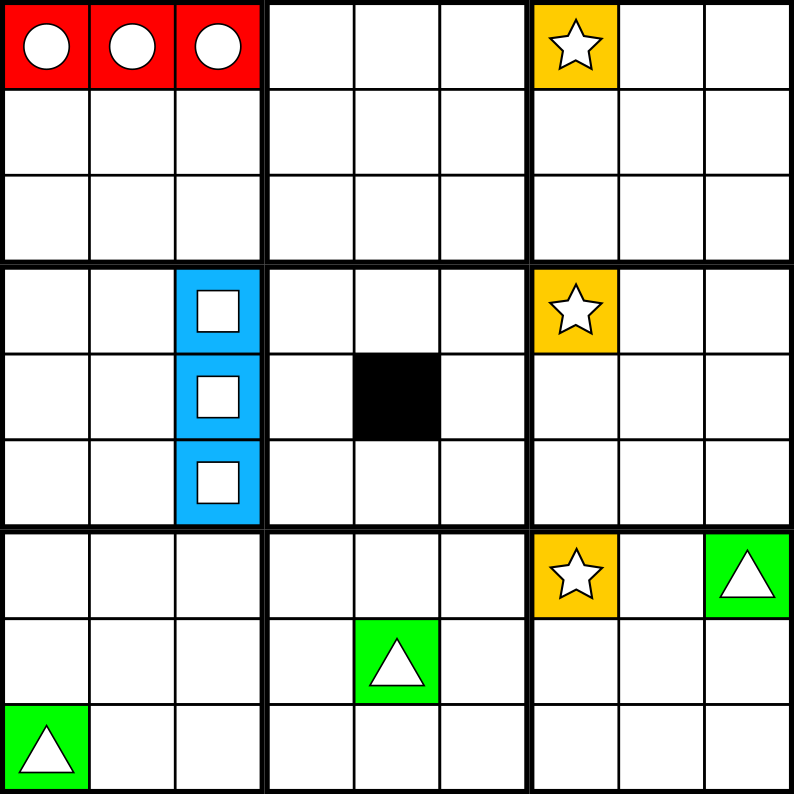 Dæmi 1: Fjórar ólíkar línur hafa verið fylltar. Rauða hringlínan fer alltaf eitt skref til hægri. Bláa ferningalínan fer einn reit upp eða niður. Gula stjörnulínan fer einn reit niður og síðan eitt borð niður. Græna þríhyrningslínan fer einn reit upp og eitt borð til hægri.
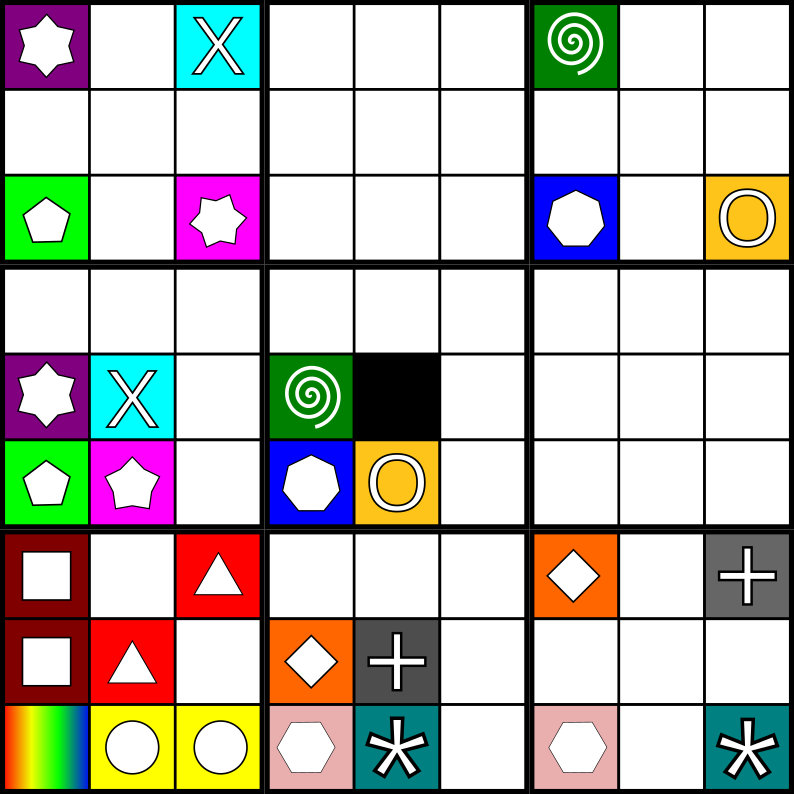 Dæmi 2: Allar línur sem fara í gegnum reitinn í neðra vinstra horninu, hver með sínum lit og tákni. Geturðu fundið setninguna fyrir allar línurnar?
Þegar þú setur bendilinn yfir reit sýnir leikurinn allar línur sem liggja í gegnum hann, hverja með sínum lit og tákni, til að hjálpa þér að halda utan um þær. Ef þú setur bendilinn yfir tóman reit eða reit sem þú stjórnar verða aðeins auðkenndar þær línur sem þú gætir hugsanlega klárað með því að taka reitinn. Ef þú setur bendilinn yfir reit sem andstæðingurinn stjórnar verða aðeins auðkenndar þær línur sem hann gæti hugsanlega klárað og fela í sér þann reit. Allar óvirkar línur (línur sem hvorugur leikmaður getur klárað eða hafa þegar verið kláraðar) eru síaðar út.
Miðreiturinn í miðju miðborðsins er bannaður báðum leikmönnum og má ekki taka. Þetta er eingöngu til að halda jafnvægi í leiknum — miðreiturinn hafði 40 mismunandi línur sem lágu í gegnum hann og náðu yfir alla aðra reiti. Þar af leiðandi myndi leikmaðurinn sem tæki miðreitinn alltaf vinna með miklum mun.
Þessi kafli er stutt hliðarumfjöllun um rúmfræðina sem liggur að baki leiknum, til að byggja upp innsæi fyrir því sem er að gerast. Á þessum tímapunkti ættirðu þó að skilja leikinn nógu vel til að byrja að spila.
Það getur virst afar flókið að átta sig á því hvernig borðin og línurnar virka og tengjast, en í raun er leikurinn aðeins fjórvíð útgáfa af krossi og núlli og sömu grundvallarreglur og gilda í tvívíðu útgáfunni gilda hér. Það getur tekið smá æfingu að venjast þessu, en ekki líða margar umferðir þar til þú byrjar að átta þig á því hvernig línurnar virka og hvernig á að koma auga á þær.
Fyrir þá sem hafa meiri áhuga á rúmfræði er hins vegar furðu auðvelt og fallegt að byggja upp huglæga mynd af því hvernig borðið virkar, og við byrjum á einvíðri línu.
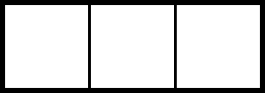
Í einni vídd er leikurinn einfaldlega lína með þremur reitum. Ekki mjög spennandi og afleitur leikur, en þetta er grunnurinn að öllu öðru.
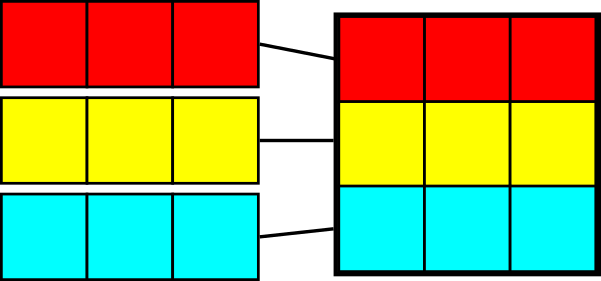
Í tveimur víddum höfum við klassíska 3x3 reitakerfið, með þremur röðum, þremur dálkum og tveimur hornalínum, alls 8 línur. Hins vegar má sjá að tvívítt reitakerfi er í raun þrjár einvíðar línur sem staflað er hverri ofan á aðra til að mynda reitakerfi. Hver hinna þriggja einvíðu lína hefur enn sína línu í gegnum sig, en nú er einnig hægt að draga línu lóðrétt eða á ská — sem gefur okkur alls 8 gildar línur á kross- og núllborði.
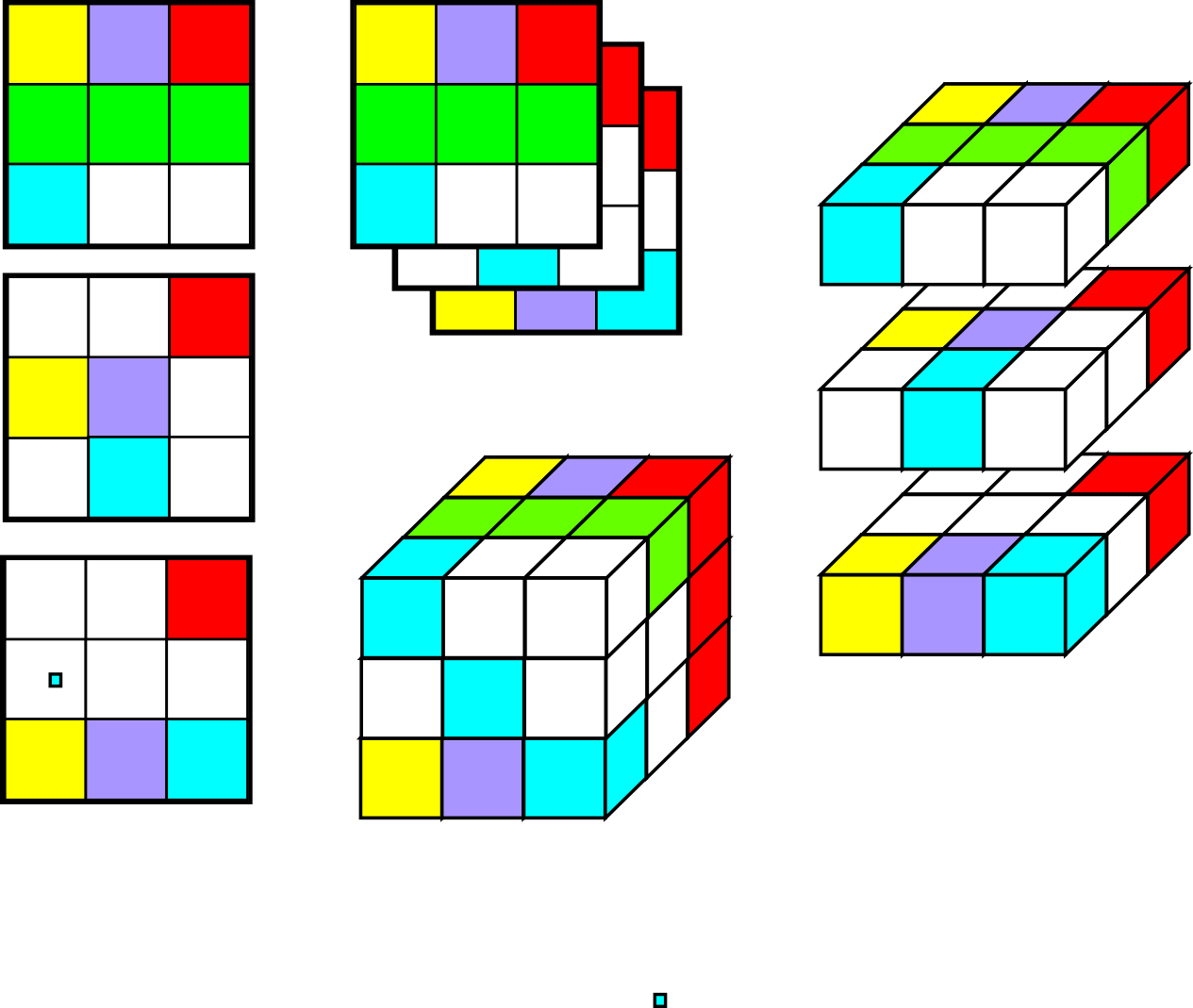
Ef við förum einu skrefi lengra og staflum þremur tvívíðum reitakerfum hverju ofan á annað fáum við tening! Teningur er þrívíð útvíkkun á 3x3 reitakerfinu okkar. Enn má með sæmilegu móti sjá hvar línurnar 49 liggja: Hvert tvívítt borð sem myndar teninginn hefur enn sínar 8 línur, en nú geta línur einnig legið í gegnum teninginn sjálfan — beint niður, frá horni til horns, á ská frá einum kanti til annars og svo framvegis. Það væri auðvelt að finna út hvernig ætti að spila kross og núll á teningi: sá sem fyrstur litar þrjá litla teninga í röð vinnur!
Hvert dæmanna hér að neðan sýnir sama teninginn með sömu beinu línunum lituðum. Í einu dæminu eru aðeins sýnd þrjú tvívíð reitakerfi til viðmiðunar, svo sjá megi hvernig hægt væri að tákna teninginn sem 3x3 reitakerfi.
Gefðu þér smástund til að skoða þetta, því nú ætlum við að taka nokkuð stórt stökk á leiðinni að áfangastaðnum: fjórðu víddinni.
Hér fara hlutirnir að verða svolítið snúnir, því við — takmarkaðar þrívíðar verur eins og við erum — getum ekki séð fyrir okkur fjórðu víddina né yfirteninginn sem við ætlum að smíða. En reynum samt!
Ef við tökum þrjá þrívíða teninga og staflum þeim hverjum ofan á annan fáum við yfirtening. Yfirteningur er fjórvíð útvíkkun á hugmyndinni sem við höfum unnið með hingað til. Þótt við getum ekki séð hann fyrir okkur getum við samt skilið hvernig línurnar virka með sömu grundvallarreglum og áður — hver þrívíður teningur sem myndar yfirteninginn hefur sínar venjulegu 49 línur, en nú geta línur einnig farið í gegnum yfirteninginn sjálfan og skorið yfir marga teninga.
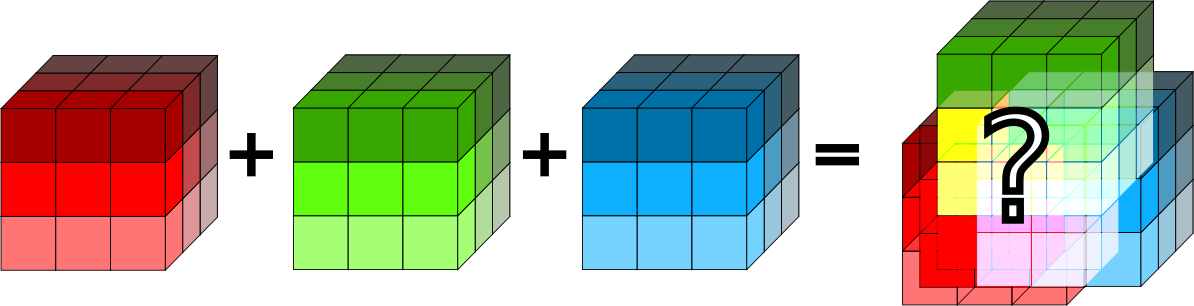
Þrátt fyrir að mynstrið sé ekki auðvelt að sjá fyrir sér er það samt hið sama: Við byrjum á línu og staflum síðan þremur línum saman til að mynda reitakerfi. Við tökum þrjú eintök af reitakerfinu til að mynda tening og síðan þrjá teninga sem við stöflum saman til að mynda yfirtening. Sömu grundvallarreglur gilda á hverju stigi og sömu hreyfimynstur og mynduðu línur í fyrri víddum mynda enn línur í þeirri næstu; við þurfum bara að beita þeim yfir fleiri víddir.
Og þótt það væri ekki mjög góður leikur að teikna yfirtening á skjá getum við auðvitað svindlað svolítið með því að fletja allt saman til að fá níu reitakerfi. Svo lengi sem við fylgjum settum reglum um hvaða reitir tengjast hvar kemur allt út á sama stað.
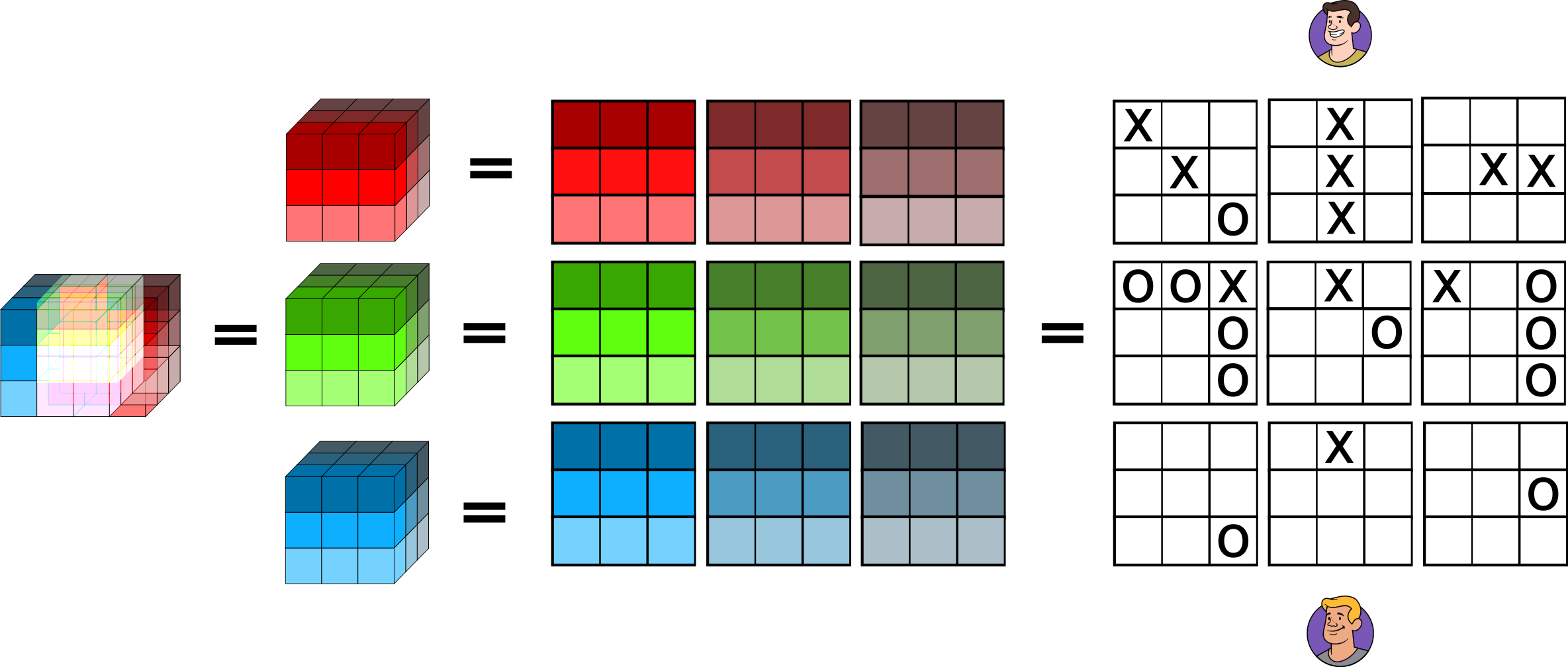
Þannig erum við komin aftur í tvær víddir. Rétt eins og hægt var að tákna tening með þremur kross- og núllborðum er fjórvítt leiksvæðið okkar aftur táknað með níu borðum sem raðað er í þriggja sinnum þrjú reitakerfi. Ef við vildum gætum við útvíkkað hugmyndina enn frekar í 5D, 6D eða hvaða D sem er. Níu borð eru þó nú þegar alveg nóg viðureignar... í bili.
Four Tac Toe er dálítið sérkennilegur leikur sem varð til fyrst og fremst vegna þess að hugmyndin um fjórvítt kross og núll heillaði okkur kannski meira en gildi hennar sem raunverulegs og skemmtilegs leiks. Engu að síður teljum við hann vera merkilega framför frá klassíska krossi og núlli. Hann er krefjandi, tekur tíma að ná tökum á honum og með fjölbreyttu úrvali tölvuandstæðinga ætti hann að vera skemmtileg áskorun fyrir alla.
Við vonum að þú hafir gaman af litlu tilrauninni okkar. Og eins og alltaf, láttu okkur endilega vita ef þú hefur tillögur, athugasemdir eða vilt tilkynna villu! (Eða ef þig langar einfaldlega að ræða stærðfræði fjölvíðs krosss og núlls við okkur — við erum líka til í það.)
Allar athugasemdir, kvartanir, villutilkynningar, spurningar eða hvað annað sem er ætti að senda til support@simplegames.io. Við getum ekki svarað öllum, en reynum að svara eins mörgum og við getum. Ef þú ert með stutta spurningu skaltu ganga úr skugga um að henni hafi ekki þegar verið svarað í algengum spurningum svarað í algengum spurningum.
Þú getur líka fundið okkur á þessum síðum:
Aðalforskriftin sem keyrir leikina okkar virðist af einhverjum ástæðum ekki hafa hlaðist inn.
Þetta gerðist þrátt fyrir að aðrar forskriftir virðist hafa hlaðist inn án vandkvæða.
Þetta vandamál hefur verið tilkynnt sjálfkrafa og við erum að skoða það, en við værum mjög þakklát ef þú gætir sent skýrslu til support@simplegames.io með öllum frekari upplýsingum sem þér dettur í hug, þar á meðal hvort þú sért með viðbætur sem loka á forskriftir eða auglýsingar, eða hvort vafrinn þinn sé stilltur á að loka á tilteknar tegundir forskrifta.
